Our control panel technician course is designed to provide the technical knowledge and practical skills needed to design and troubleshoot electrical control panels. Become an expert in maintaining power systems for commercial buildings and industrial plants with control panel training from Arabian Infotech Qatar. Take your electrical skills to the next level with the control panel course.
Control Panel Technician Training Overview
The control panel training course covers all important concepts from the basics to advanced wiring techniques, following safety standards. It is developed to provide comprehensive training in reading electrical drawings, testing circuits, and performing panel wiring. Control panel design training gives proficiency in building and maintaining systems needed for industrial automation.
Gain hands-on skills in VFDs, PLCs, wire routing, identifying faults, and mounting components. Become proficient in automation projects and in electrical maintenance with the control panel wiring training. The course is suitable for both beginners and professional electrical technicians who want to upgrade their knowledge. Become confident in working with electrical systems.
Electrical Control Panel Course Syllabus
The syllabus of the electrical control panel design training course includes the following topics:
1. Introduction and Fundamentals
- Understand the basics of electrical engineering, including voltage, current, Ohm’s Law, power, AC, DC, and resistance.
- Know the various types of industrial control panels, such as LT, HT, MCC, PCC, and ATS, and their application in industries.
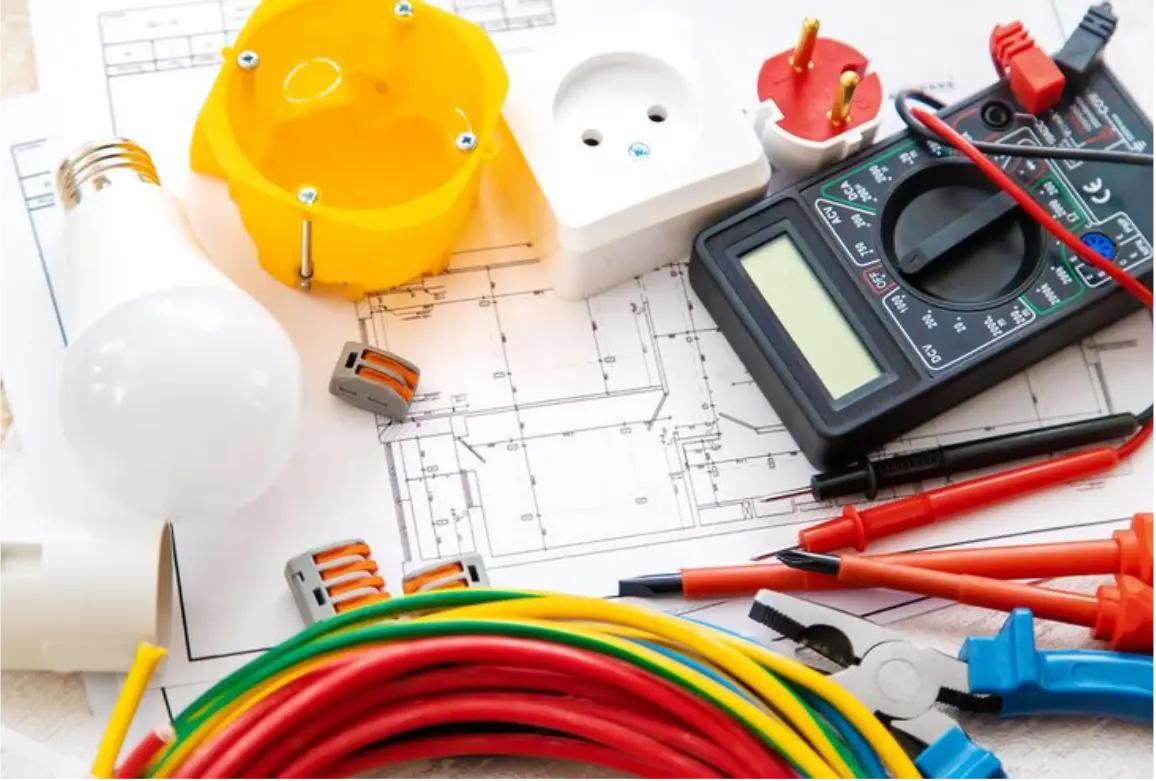
- Have an overview of the electrical components, including relays, contactors, push buttons, overload relays, etc.
- Understand the basic electrical tools and testing instruments. Learn about electrical hazards, safety standards, and PPE.
2. Basics of Electrical Design
- Find out how to calculate electrical loads like resistive, inductive, and capacitive, and current from the power rating.
- Study the principles of cable sizing, including current carrying capacity, voltage drop calculation, etc.
- Understand the basics of earthing and grounding. Learn about the selection of protective devices and the selection criteria to be followed.
- Know the basics of Single Line Diagrams and power and control circuit design.
- Become familiar with the electrical faults and fault current.
3. Plan Layout Design and Assembling
- Have an overview of panel layout design, its purpose, panel dimensions, and heat dissipation.
- Learn about the types of enclosures and find out how to select the materials for panel enclosures, and how to choose between wall-mounted and floor-mounted panels.
- Study the planning of the positioning of components such as MCBs, relays, VFDs, contactors, etc.
- Know the methods for fixing DIN rails and the techniques for mounting plates with proper spacing.
- Understand cable duct sizing, terminal numbering, busbar cutting, busbar support, and insulation application.
4. Electrical Wiring and Power Systems
- Have an overview of the various types of wiring used in control panels, and the difference between control and panel wiring.
- Know the different types of cables and the selection of the right cable based on the load calculation.
- Study the types of lugs and terminals, and crimping methods. Understand the wiring practices.
- Learn about motor power wiring and the fundamentals of VFD power connections.
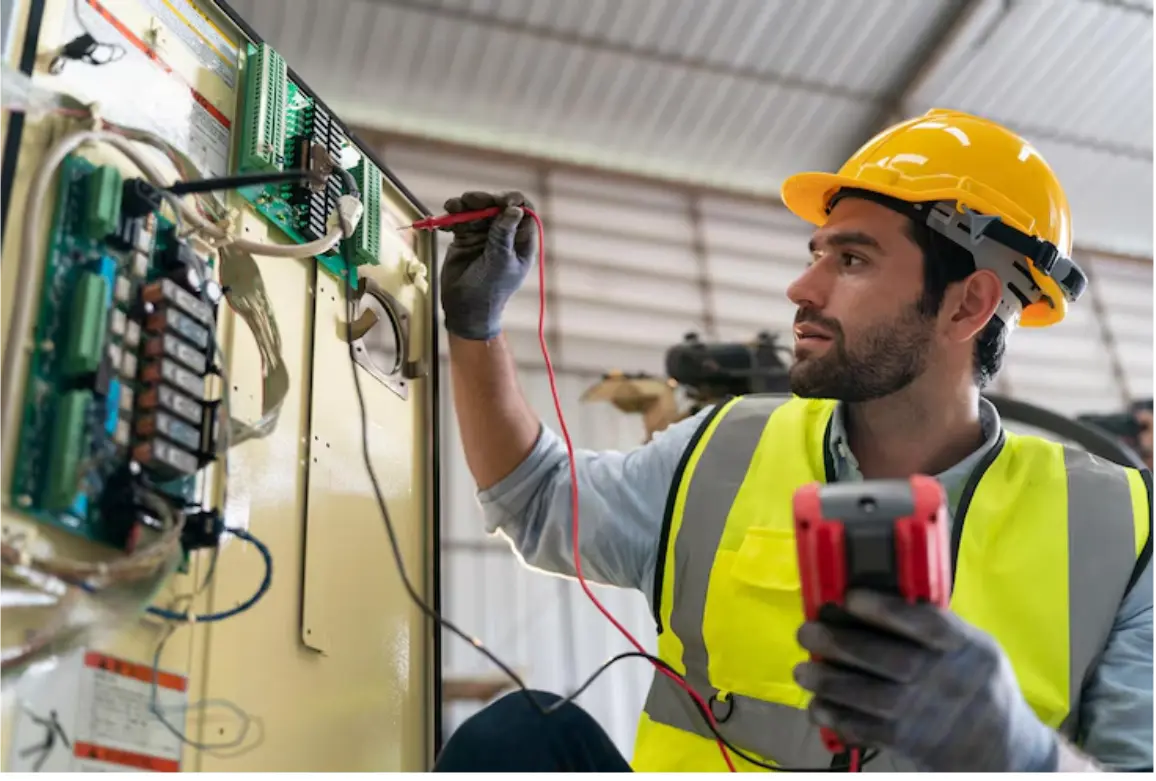
- Understand the usage of a multimeter for testing and how to test insulation resistance and phase sequence.
5. PLC Integration
- Know what a PLC is, its working principle, and its applications. Study its components, including DI, DO AI, and AO modules, CPU module, and communication modules.
- Study the wiring of sensors, relays, switches, and contactors. Learn about the placement of PLC modules.
- Understand the wiring of a 24V DC power supply, and the practices of earthing and shielding.
- Learn about communication integration with Ethernet communication and connecting the PLC with the VFD.
- Learn about the safety practices, right documentation, and proper labelling.
6. Testing
- Have an overview of pre-power and post-power checks, the testing instruments and tools, such as a multimeter, clamp meter, megger, and phase sequence tester.
- Learn in detail about pre-commissioning tests, including continuity checks, visual inspection, and insulation resistance testing.
- Understand the power-on testing procedures, such as control circuit checking, voltage level checking, and phase sequence checking.
- Study the PLC testing, including I/O point testing, signal tracing, and interlock testing.
7. Troubleshooting
- Know the common panel faults such as the short circuits, overload trips, relay failures, loose connections, overheating, and power supply faults. Find out how to diagnose them.
- Understand the fault-finding approaches and the basics of root cause analysis.
- Learn about the troubleshooting of the control circuit and motor starter. Study the common issues and troubleshooting techniques.
- Study PLC-based troubleshooting of the basic communication errors and sensor and actuator faults.
- Learn about step-by-step fault finding, the usage of testing instruments, and the safety procedures to be complied with.
8. Hands-on Training
- Practical training in the usage of PPE and safe handling of electrical tools and testing tools.
- Learn about how to make DOL starter wiring, interlock wiring, star-delta starter wiring, and timer wiring.
- Gain hands-on skills in control panel assembly, which includes important steps like DIN rail fixing, component mounting, and relay installation.
- Get practical training in single-phase and three-phase motor connections and VFD control wiring.
- Hands-on training in sensor connection, testing practices, trial runs, and fault rectification.
Why Learn Control Panel Training in Qatar?
Industrial automation is rapidly growing in Qatar’s oil and gas sectors. Moreover, smart building projects are also on the rise. So, professionals with electrical control panel training are in high demand. If you are a beginner, learn control panel wiring training, and if you are a technician, learn the course to take your career to the next level.
Demand for Control Panel Technician Course
Most industries rely on automation in the digital world. They require trained panel technicians to design, maintain, and troubleshoot control panels and avoid breakdowns in construction, power plants, oil&gas companies, automobile industries, and manufacturing plants. Technicians with hands-on training in assembling, wiring, testing, and commissioning panel systems are highly sought-after.
Control Panel Wiring Courses Outcome
- After completing control panel wiring courses, you will gain expertise in installing and assembling electrical components.
- You will become proficient in performing professional panel wiring using the right techniques and following safety standards.
- Trainees will complete complex DOL and PLC I/O wiring independently.
- On completion of industrial control panel training, you will get a certificate, which will improve your job opportunities and increase your income.
Who Can Attend a Control Panel Technician Course?
The industrial control panel design training is suitable for:
- Electrical technicians and wiremen are looking to update their knowledge.
- MEP technicians and PLC professionals who want to specialize in control panels.
- Fresh graduates and diploma holders in electrical engineering who are interested in launching their career as a control panel technician.
- Site engineers who want to exercise better control over the project.
Why Join Arabian Infotech for Control Panel Wiring Training?
Arabian Infotech is popular for its short-term specialized courses designed for professionals who want to upgrade their skills and update their knowledge. You should join the Control Panel Wiring Training Course in Arabian Infotech because of its
- A comprehensive curriculum that covers all aspects from the basics, making it suitable for beginners and professionals.
- The course includes both theoretical and practical training, making the participants industry-ready.
- Flexible class schedules, including weekend and online classes.
- Experienced trainers providing dedicated training.
- Career support and placement guidance.
Join Now to take the next step in your career and become a successful control panel technician.
The admission process is simple. Fill in the online application form and submit it. If you have any doubts, contact the support team.
FAQ
You will learn to use electrical hand tools, measuring tools, testing instruments, panel assembly equipment, and installation tools.
The duration varies depending on the intensity of the syllabus, the location, and the institution. However, the normal duration is from 4 to 6 weeks.
It is a combination of theoretical and practical training. You will learn both theory and hands-on training.
A control panel technician wires, tests, assembles, installs, and troubleshoots electrical control panels.
The key topics covered include wiring, assembly, testing, technical drawings, and panel design.
Course Rating
5.00 average rating based on 1180 rating







 Frequency:
Monthly
Frequency:
Monthly